South Africa’s AI push is running ahead of its digital foundations

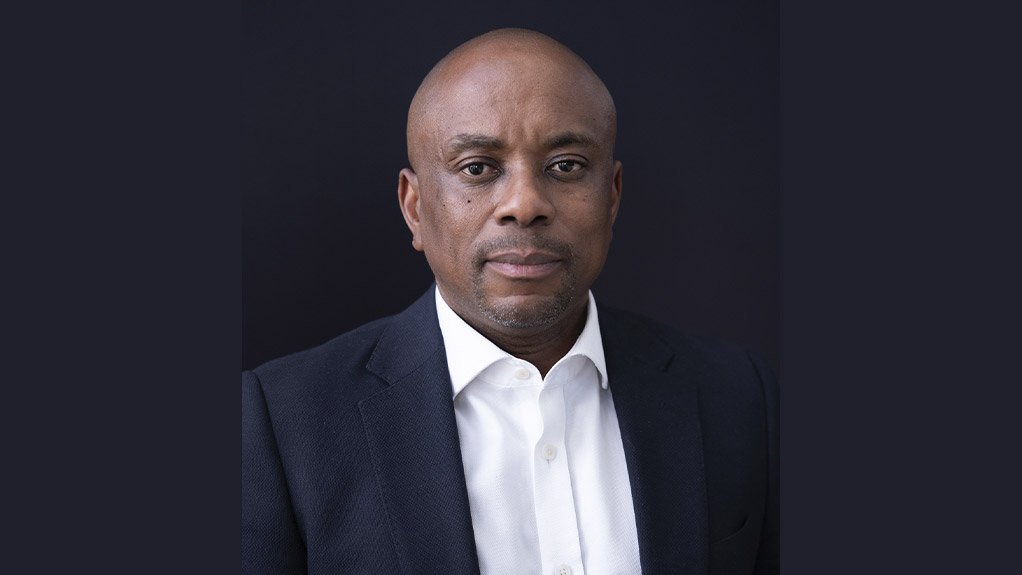



This article has been supplied.
By: Kgomotso Lebele - Country Managing Director for Accenture, South Africa
Consider this: you lead a large retail business. Six months ago, you approved a significant generative AI investment to personalise customer promotions. The business case was compelling, the pilot results were strong, and the board supported the move. The tool is now live. But it is operating at a fraction of its intended capacity, reaching only part of the target customer base, and already exceeded its original cost projections.
Your CTO assures you the AI is performing as designed. They are right, what failed was not the technology, but the foundations underneath it: a decade-old inventory system never built for real-time data exchange, pricing data siloed across business units, and fragmented customer histories across legacy databases.
You approved the AI. Nobody flagged the foundations. This is no longer hypothetical. It is playing out across South African enterprises investing heavily in digital transformation.
The value gap nobody is talking about
More than 80% of South African enterprises increased ICT budgets in recent years. IT spend grew by 11% between 2022 and 2025, with AI investment rising by 80% over the same period. Yet, business performance has not kept pace. Revenue growth across sectors remained subdued.
This divergence, points to a widening gap between technology investment and business outcomes. By 2025, our analysis shows that technology spend has outpaced revenue growth by roughly 115 percentage points. Investment is accelerating faster than the value it is meant to create. The explanation is uncomfortable but clear: many organisations are deploying sophisticated technologies on foundations that were never designed to support them.
Why leaders aren't acting on it
Accenture’s research shows that 89% of South African executives acknowledge that legacy infrastructure limits their agility and contributes to growing technical debt. Yet only 24% are actively addressing it.
This is a visibility gap. AI initiatives are visible, measurable and time bound. By contrast, foundational work – modernising data architectures, integrating core systems, resolving technical debt – is slower, less visible, and often treated as operational spend rather than strategic investment.
The result is predictable: organisations optimise for what can be seen and measured in the short term, while underinvesting in what determines whether those initiatives scale. As a result, organisations prioritise short-term visibility over long-term scalability.
What the evidence shows when the foundation is right
Where the foundations are strong, the results are clear. One of the largest retail banks by customer base in South Africa has built its model on a digital foundation designed for simplicity and scale. By late 2024, it had reached 23 million clients, with more than half actively using its app. Digital and card payments grew 24%, while headline earnings increased 36% for the half-year in 2024. Its cost-to-income ratio of approximately 37% and return on equity of 29% reflect a business built for efficiency.
A similar pattern is evident elsewhere, including a local digital bank built on a cloud-native architecture, reached 10 million customers in under six years and achieved profitability ahead of schedule.
These organisations did not outperform because they invested more in AI. They outperformed because they built the conditions that allow AI, and every other technology, to deliver lasting results.
The paradox hiding in plain sight
AI is not just underperforming on weak foundations; it is actively making them weaker. Every temporary integration, workaround, and model trained on inconsistent data introduces complexity that persists.
Accenture's research shows that AI and enterprise applications are now among the largest contributors to technical debt in complex organisations. Managing that debt already consumes between 20% and 40% of IT budgets. The challenge is that it accumulates through success. A pilot works. Results are strong. The board approves expansion. But scaling either requires rebuilding properly or accepting inherited fragility. Most organisations choose the latter. AI debt is harder to see than traditional technical debt. It hides behind working pilots and only surfaces when scaling fails, by which point organisations are already committing the next round of investment.
Three disciplines that cannot be delegated
Accenture’s research identifies three disciplines required to build a reinvention-ready digital core (spanning cloud, data and AI, platforms, security and applications) all requiring direct leadership attention.
The first is building for industry, not a generic template. Infrastructure growth alone does not translate into value. A bank running legacy systems faces different constraints to a mining company operating in low-connectivity environments. Competitive advantage comes from identifying which capabilities matters most in context.
The second is treating innovation investment as a compounding discipline. Organisations that consistently increase innovation spend build momentum. Those that hold it flat, particularly under pressure, do not stand still, they fall behind. A 6% annual increase is emerging as a threshold for maintaining competitiveness.
The third is managing technical debt as a strategic asset. Around 15% of IT spend is emerging as a critical balance point. Below this, complexity compounds and limits scale. Above it, investment is absorbed by fixing the past, delaying new growth.
The question leaders need to ask
AI investment is accelerating across South Africa. The constraint is no longer access to technology; it is the ability to support it at scale. Foundations are not a technical detail to be addressed later. They determine whether investment translates into performance. The organisations pulling ahead are those building the structural conditions for sustained value.
The question is no longer whether to invest in AI. It is whether the business is built to extract value from it. AI will not fail South African companies. Weak foundations will, quietly at first, then all at once, turning promise into cost when it is far harder, and far more expensive, to fix.
Article Enquiry
Email Article
Save Article
Feedback
To advertise email advertising@creamermedia.co.za or click here
Research Reports

Projects


Latest News

Showroom
AxFlow AQS Liquid Transfer (Pty) Ltd is an Importer and Distributor of Pumps in Southern Africa
VISIT SHOWROOM
Established in 1933, EKATO is the world leader in agitation technology, supplying agitators for processes and applications such as chemicals and...
VISIT SHOWROOM

Press Office
Announcements
What's On
Subscribe to improve your user experience...
Option 1 (equivalent of R125 a month):
Receive a weekly copy of Creamer Media's Engineering News & Mining Weekly magazine
(print copy for those in South Africa and e-magazine for those outside of South Africa)
Receive daily email newsletters
Access to full search results
Access archive of magazine back copies
Access to Projects in Progress
Access to ONE Research Report of your choice in PDF format
Option 2 (equivalent of R375 a month):
All benefits from Option 1
PLUS
Access to Creamer Media's Research Channel Africa for ALL Research Reports, in PDF format, on various industrial and mining sectors
including Electricity; Water; Energy Transition; Hydrogen; Roads, Rail and Ports; Coal; Gold; Platinum; Battery Metals; etc.
Already a subscriber?
Forgotten your password?
Receive weekly copy of Creamer Media's Engineering News & Mining Weekly magazine (print copy for those in South Africa and e-magazine for those outside of South Africa)
➕
Recieve daily email newsletters
➕
Access to full search results
➕
Access archive of magazine back copies
➕
Access to Projects in Progress
➕
Access to ONE Research Report of your choice in PDF format
RESEARCH CHANNEL AFRICA
R4500 (equivalent of R375 a month)
SUBSCRIBEAll benefits from Option 1
➕
Access to Creamer Media's Research Channel Africa for ALL Research Reports on various industrial and mining sectors, in PDF format, including on:
Electricity
➕
Water
➕
Energy Transition
➕
Hydrogen
➕
Roads, Rail and Ports
➕
Coal
➕
Gold
➕
Platinum
➕
Battery Metals
➕
etc.
Receive all benefits from Option 1 or Option 2 delivered to numerous people at your company
➕
Multiple User names and Passwords for simultaneous log-ins
➕
Intranet integration access to all in your organisation